Wondering whether a townhome or duplex in Sunnyside is the smarter buy? You are not alone. In this part of Denver, attached homes can offer a practical path into a central neighborhood, but the details behind ownership, HOA rules, insurance, and zoning matter more than many buyers expect. This guide will help you understand what to look for before you write an offer and what questions to ask before closing. Let’s dive in.
Why attached homes matter in Sunnyside
Sunnyside has a long housing history, and that helps explain why you will see a mix of home types today. The neighborhood includes older small-lot homes, attached infill, and newer replacement construction within boundaries described by the Denver Public Library as roughly 38th Avenue to I-70 and Inca to Federal.
That mix can create real opportunity for buyers who want location, lower maintenance, or a lower entry price than a detached home of similar size. It can also create confusion, because two homes that look similar from the street may have very different ownership structures, costs, and renovation limits.
Another local factor is the Sunnyside Conservation Overlays CO-7 and CO-8, which Denver adopted in 2023 for 3,259 homes. The city says these overlays are meant to reduce out-of-scale development and better control bulk, massing, and appearance, so if you are buying with future remodel plans in mind, you will want to verify the property’s zoning and overlay status early.
Townhome vs duplex in Denver
What a townhome usually means
A townhome is often a multi-level home attached to another home by a shared wall. Fannie Mae describes townhomes as houses with two or three levels that are attached to similar houses, and notes they are often less expensive than same-size detached homes because they are built upward rather than outward.
Denver building code also uses a townhouse definition in certain contexts. In city code, a townhouse is a single-family dwelling unit in a group of three or more attached units, with each unit extending from foundation to roof and having a yard or public way on at least two sides.
What a duplex means
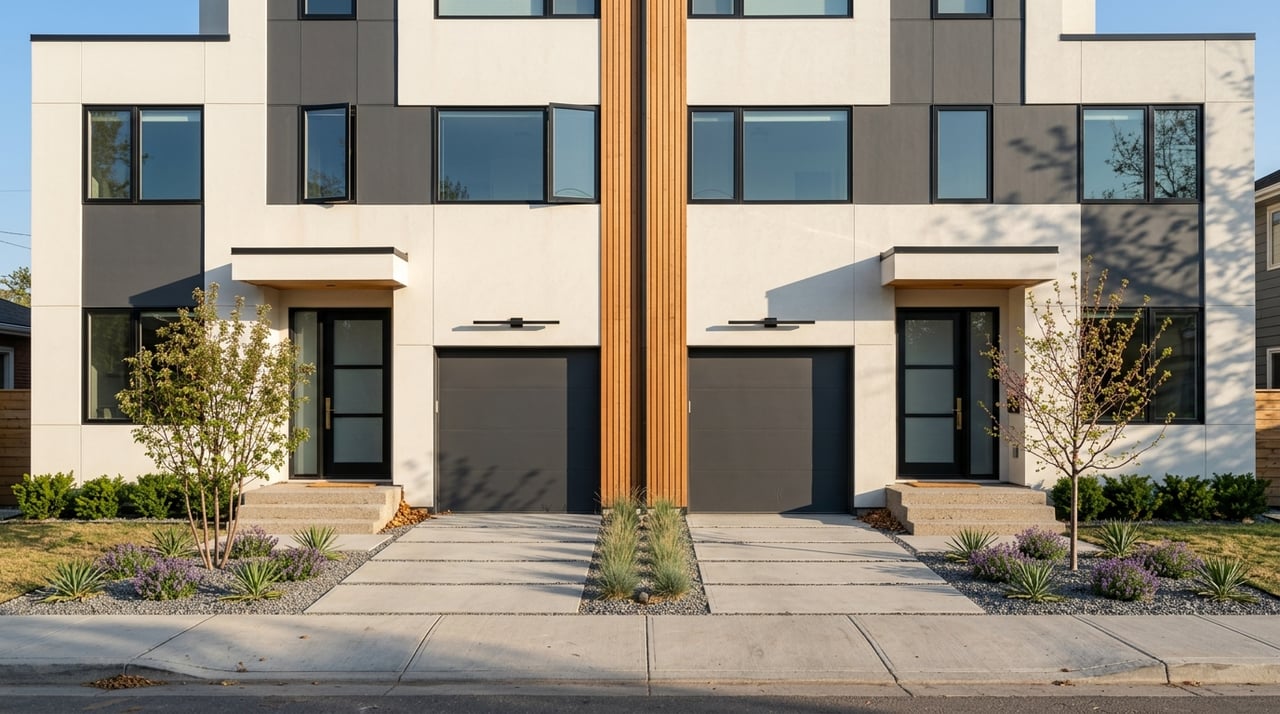
Denver zoning defines a two-unit dwelling as two dwelling units in one structure, such as a duplex. The city also notes that R-2 districts are typically duplexes and triplexes.
A duplex may look straightforward, but ownership can vary. Denver’s planning glossary explains that a duplex can be two joined, separate properties that may have separate owners, which is one reason you should never rely on the floor plan or exterior alone.
Why the legal structure matters
Here is the big point: the way a property is titled matters just as much as the way it looks. A multistory attached home might be fee simple, or it could be part of a condo project where you own the unit and share ownership of land and common areas.
That difference affects your monthly costs, maintenance responsibilities, financing, insurance, and resale. In Sunnyside, where older homes and newer infill sit side by side, confirming the legal setup is one of the most important steps you can take.
Fee simple vs condo ownership
If you buy a fee simple property, you generally own the home and the land in the broadest form of ownership. If you buy in a condo-style project, you typically own the unit itself and share ownership of the land and common portions with other owners.
This is where buyers can get tripped up. Some attached homes are marketed like townhomes, but the title structure functions more like a condo. That means the exterior style does not tell you everything you need to know.
Before you make assumptions about control, privacy, or maintenance, confirm the ownership structure through title work and recorded documents. That one step can save you from surprises later.
HOA rules can shape your ownership experience
Many townhomes and some duplex-style properties in Denver are part of a common-interest community. If that applies to the home you are considering, you should review the HOA documents carefully because they affect more than dues alone.
According to Colorado’s HOA Information & Resource Center, the main governing documents include:
- The declaration or CC&Rs
- Bylaws
- Governance policies
- Rules and regulations
- Design guidelines
Colorado also does not maintain a central repository of HOA documents. In practice, that means you will usually need to get the current package from the seller, listing agent, or association.
What to look for in HOA documents
You want to know what the HOA controls, what it maintains, and what it can charge for. Review whether the association has policies for collections, enforcement, conflicts of interest, meetings, reserve studies, and records inspection.
You should also look for practical limits that affect daily life and future plans. For example, design guidelines may affect exterior changes, fences, patios, windows, or other visible updates.
Compare total monthly cost, not just price
A lower list price does not always mean a lower cost of ownership. This is especially true with attached homes, where HOA dues may be paid separately from the mortgage payment.
When you compare a Sunnyside townhome or duplex to a detached house, look at the full monthly picture:
- Mortgage payment
- Property taxes
- Homeowners insurance
- HOA dues, if any
- Expected utility costs
- Possible future special assessments
This is one reason attached homes can be appealing but still require a careful budget review. A townhome may cost less than a same-size detached home, but HOA dues and assessment exposure can change the math.
Ask how well the HOA is funded
HOA fees are not just another bill. They can tell you something about how the community plans for repairs and long-term maintenance.
Fannie Mae recommends reviewing financial statements and asking about reserve funding. A portion of dues should go toward reserves, and special assessments can happen when a community faces major repairs or disaster-related work.
For buyers, the key question is simple: is the association planning ahead, or reacting late? If reserve funding looks weak, or if major work is coming, your future monthly cost may be higher than it appears today.
Insurance is often more complex
Insurance for an attached home can be more layered than insurance for a detached house. Colorado DORA says owners of condominiums and townhomes should compare their own policy with the HOA’s master policy and watch for coverage gaps, loss assessments, and deductibles.
That means you should not assume the HOA covers everything outside your walls. In some communities, the master policy may cover parts of the exterior or common areas, while your personal policy may need to cover interior elements and other risks.
It is also worth remembering that flood insurance is separate from standard homeowners coverage. Before closing, ask for the master policy details and review them alongside your own proposed coverage.
Financing can depend on the project
If the property is part of a condo-style project, your lender may review more than just your personal finances. Fannie Mae says lenders evaluating condos may look at the physical condition of the community, financial stability, structural debts, lawsuits, required inspections, and whether the project is warrantable.
That does not mean condo-style townhomes are a bad option. It does mean that the association’s condition and finances can affect your loan approval timeline and possibly your resale options later.
If your lender raises questions about the project, deal with them early. Waiting until the last week before closing can create unnecessary stress.
Sunnyside zoning and remodel plans
Many buyers look at a duplex or townhome and immediately start imagining additions, conversions, or future income options. In Sunnyside, that is understandable, but it is smart to verify what is actually allowed before you count on a plan.
Denver says its zoning map is the tool for finding a property’s zone district. The city also notes that accessory dwelling units are now allowed in all residential areas, effective December 16, 2024, and that single-unit, duplex, and ADU projects follow their own review path through city departments.
For Sunnyside specifically, the conservation overlays may also influence what new construction or exterior changes can look like. If flexibility matters to you, check zoning, permits, and overlay status before closing, not after.
Parking deserves extra attention
Parking may sound like a small detail until move-in day. In attached-home communities, parking can be deeded, assigned, shared, alley-based, tandem, or limited to street parking.
Fannie Mae recommends asking whether a parking spot is included with the purchase or assigned. In Sunnyside, where lot configurations can vary, get that answer in writing so you know exactly what comes with the property.
Your pre-closing checklist for Sunnyside
Before you buy a townhome or duplex in Sunnyside, make sure you verify these points:
- Confirm whether the property is fee simple, condominium, or another common-interest form
- Review title and recorded documents rather than relying only on the MLS description
- Request the full HOA document package if there is an association
- Ask what the HOA covers, including roofs, siding, windows, fences, patios, and snow removal
- Review the association’s finances, reserves, and any known special assessments
- Compare your personal insurance needs with the HOA master policy
- Verify whether parking is deeded, assigned, or shared
- Check the property’s zone district and whether a conservation overlay applies
- Confirm permit rules before planning additions, conversions, or ADU work
If any document feels unclear, bring in the right professionals early. The lender, title company, and a real estate attorney can help clarify issues before they become closing problems.
The bottom line for Sunnyside buyers
Buying a townhome or duplex in Sunnyside can be a smart move if you want a central Denver location and a home that fits your budget and lifestyle. The key is to look past the exterior and understand the ownership structure, monthly costs, HOA setup, insurance responsibilities, and zoning rules.
When you do that homework up front, you can compare options more clearly and avoid expensive surprises later. And if you want a calm, step-by-step process in English or Spanish, working with a local agent who knows Denver infill and attached housing can make the search much easier.
If you are thinking about buying in Sunnyside and want help comparing attached-home options, reach out to Joaquin Avila for a free Denver market consultation.
FAQs
What is the difference between a townhome and a duplex in Sunnyside?
- In Denver, a townhome usually refers to an attached single-family style home, while a duplex is a two-unit dwelling in one structure. The exact legal setup can still vary, so you should verify title and zoning for the specific property.
Do Sunnyside townhomes always have HOAs?
- No. Some attached homes have HOAs and some do not. If there is an HOA, ask for the full governing documents because Colorado does not keep them in one central statewide repository.
Can a Sunnyside townhome be legally classified as a condo?
- Yes. A home that looks like a townhome can still be part of a condo project, which is why the ownership structure should be confirmed through title work and recorded documents.
What should buyers review in a Sunnyside HOA before closing?
- Review the declaration or CC&Rs, bylaws, rules, design guidelines, reserve funding, financial statements, master insurance policy, and any current or likely special assessments.
How do conservation overlays affect Sunnyside homebuyers?
- Sunnyside’s conservation overlays are intended to control bulk, massing, and appearance, so they may affect exterior changes, additions, or redevelopment plans depending on the parcel.
Should Sunnyside buyers verify parking before buying a townhome or duplex?
- Yes. Parking may be deeded, assigned, shared, alley-based, tandem, or street-only, so you should confirm in writing exactly what parking rights come with the property.