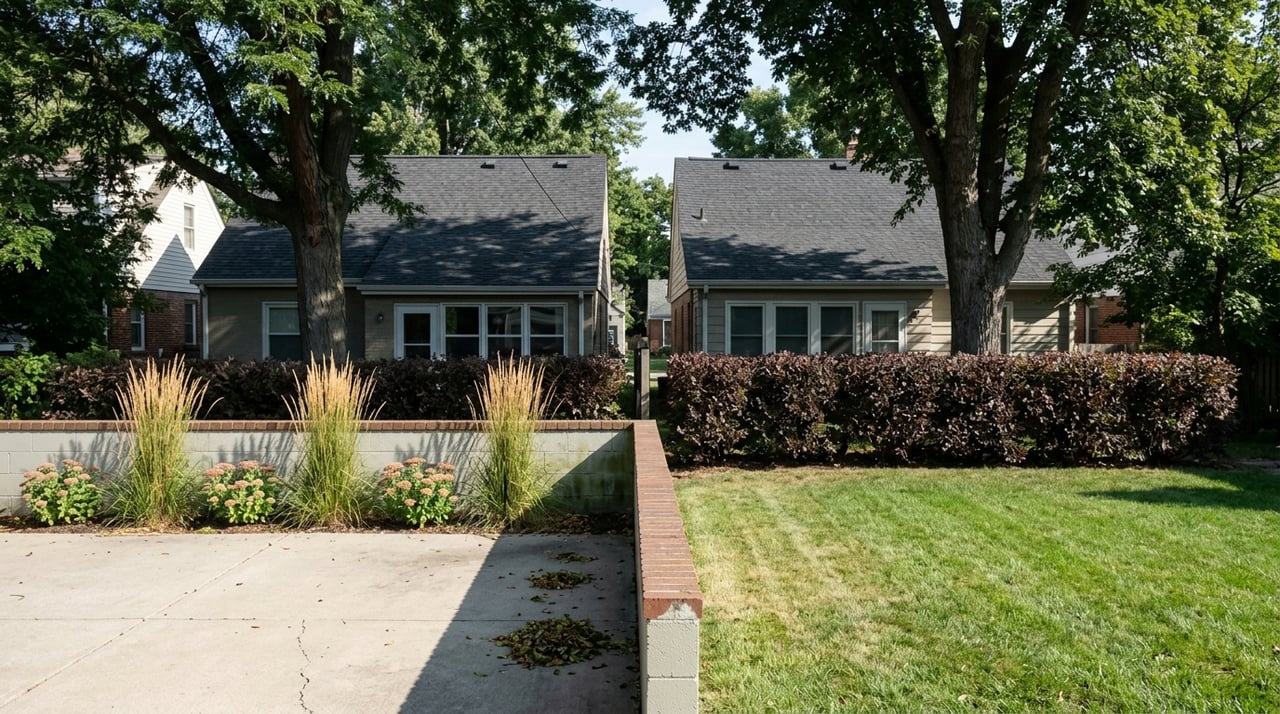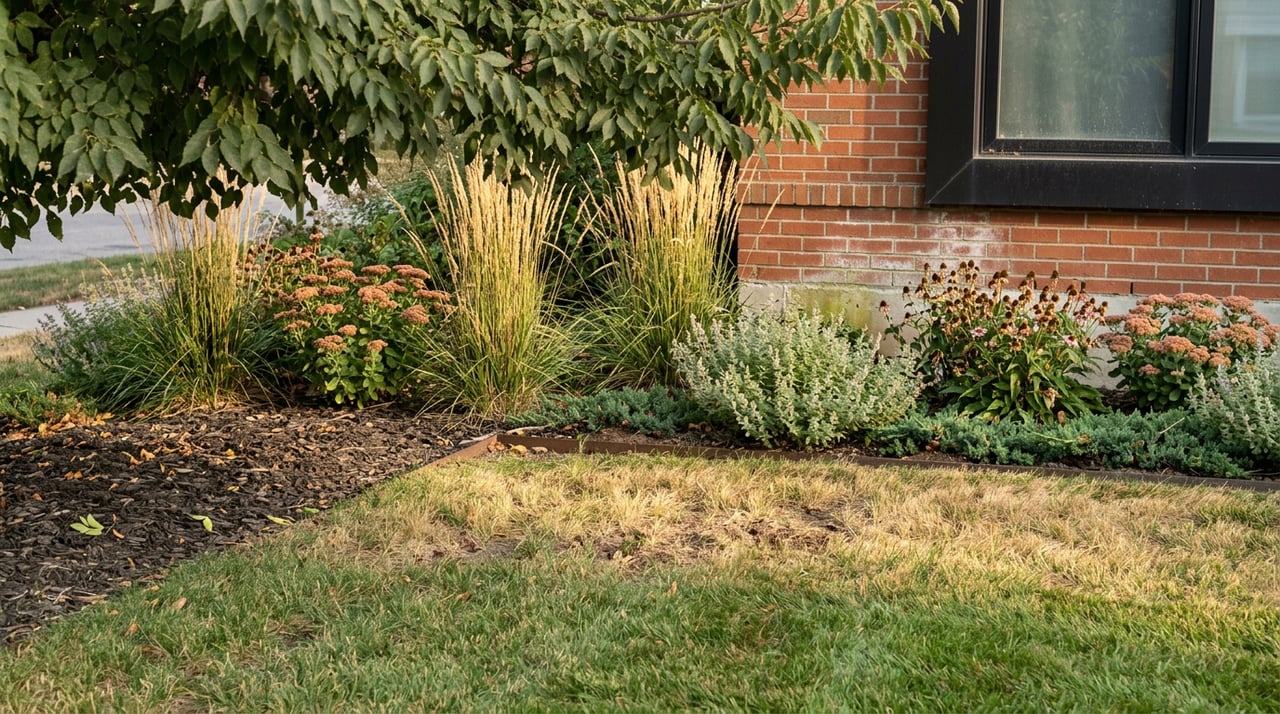
Walk the fence line at City Park Golf Course on a Tuesday afternoon and you might catch the sprinklers running. It looks like a mistake. Denver homeowners have been told all summer to water only before 10 a.m. or after 6 p.m., on two assigned days a week, or risk a fine. The course a few blocks from your front door is running water in the middle of the afternoon and nobody is getting a warning notice taped to a fence.
That is not an oversight. It is a different set of rules entirely, and understanding why tells you more about what is actually happening to the turf at City Park this year than any glance at the browning edges ever could.
The Rule Your Yard Follows That the Course Doesn't
Denver is in the middle of its worst drought on record. On March 25, 2026, the Denver Board of Water Commissioners declared a Stage 1 drought, the first since 2013 and only the fifth since 2000. The trigger was snowpack: the South Platte River Basin, which feeds Denver's supply, peaked at just 42 percent of normal on March 17, 2026, the lowest peak Denver Water has on record. Every residential customer in the system was told to cut water use by 20 percent, with mandatory outdoor watering capped at two assigned days a week and violation fines that climb from a warning to $250, then $500, then $1,000.
City Park Golf Course is not following that schedule. Under Denver Water's rules, parks, schools, and golf courses operate on their own water budgets rather than the two-day residential calendar, because their acreage makes the same tight watering windows impractical to enforce. They still have to hit the 20 percent reduction. They just get to decide when and how, which is why a sprinkler head running at 1 p.m. on a Tuesday at the course is not breaking any rule at all.
A Bucket of Water and a New Sensor
Pamela Smith, Director of Agronomy for Denver Golf, described the mandate in blunt terms to 9News in April: a fixed allotment for the entire season, with no room to renegotiate once it runs out. "We have basically a bucket of water that we can use," she said, calling it "a numerical goal to hit that we're going to meet and hopefully exceed."
Hitting that number at City Park means new tools. Crews are running a device called Turf Rad, still in beta testing, over the fairways to measure soil moisture three to four inches below the surface, so irrigation decisions are made from actual sensor readings rather than a fixed schedule. The course also draws on Denver's reuse system, treated wastewater that cannot go back into the river or be used for drinking but is approved for irrigating public grounds like golf courses and parks. Between the sensor data and the reuse supply, staff are trying to keep the parts of the course that matter for play alive without touching more potable water than necessary.
The Math Behind the Green Patches
Here is the part that explains the patchy look if you have walked the perimeter this summer. Denver Golf's seven green-grass courses, City Park included, are targeting roughly 75 million fewer gallons of water across the whole system this year. That is not being achieved by watering everything a little less. It is being achieved by choosing what not to water at all.
"How we're doing it is basically drying out the outside of the property and keeping our playing surfaces as golfer-friendly and as revenue-generating as we possibly can for as long as we can," Smith told 9News. Tees, fairways, and greens get the water. The rough at the margins, the strips along the fence line, the areas golfers rarely walk, are allowed to go dry. It is not neglect. It is triage, aimed at protecting the parts of the course that keep tee sheets full.
That triage is happening against a backdrop that has gotten dramatically worse since Smith gave that interview. As of August 6, 2026, exceptional drought, the most severe category the U.S. Drought Monitor tracks, covers 36.4 percent of Denver County, with the rest of the county sitting in extreme drought. That is the worst reading recorded in the county since weekly Drought Monitor data began in 2000, and more than 22 times larger than the only previous stretch of exceptional drought Denver had seen, which topped out at 1.6 percent of the county between October 2020 and February 2021.
There is also a gap between the target and the result. The Colorado Sun reported in July that Denver Water customers system-wide are using about 20 percent less than the weather alone would predict for a summer this hot and dry, which sounds like the goal is being met. It is not quite the same thing as 20 percent below the long-term average, which is the actual benchmark the utility set, and reservoir storage reflected the shortfall: about 78 percent full in mid-July, compared with the high 90s that would be typical for that point in a normal year. The course's careful rationing is happening inside a system that is, overall, still behind its own plan.
What You'll Actually Notice From the Cart or the Sidewalk
If you play the course, or just watch from outside the fence, the effects of that rationing show up in specific ways:
- Fairways are firmer and faster than a typical Denver summer, since less water is going into the turf under your ball.
- Greens are less receptive to approach shots, meaning a ball that would normally check up and hold is more likely to release and roll through.
- Rough is thinner and lighter this year, which Smith noted actually makes it easier to find an errant ball, one of the few upsides of a dry season.
None of this has slowed demand. City Park Golf Course reopened in 2020 after three years of reconstruction and has remained one of the harder tee times to book in Denver ever since, drought or no drought. The course is playing differently this summer, not less.
The Patio Doesn't Check the Turf Report
None of the water math touches the other half of what makes City Park Golf Course a neighborhood fixture: City Park Tavern, the clubhouse restaurant at 3181 E 23rd Ave. Assistant manager Rita Pereira has said that on a nice day, non-golfers can make up half the crowd on the patio, people who never touch a club but come for the floor-to-ceiling views of the mountains and the downtown skyline. The bar leans into the golf theme anyway, with drinks like the Tee Time Spritz and a vodka-spiked take on an Arnold Palmer called the John Daly, alongside a rotating beer list. A firmer fairway or a drier rough doesn't change any of that. The patio fills up the same way it always has, regardless of what the turf report says.
A Shared Lawn, Managed Differently Than Yours
The next time you notice the edges of City Park Golf Course looking a shade browner than the rest of the park, or catch a sprinkler running at an hour your own yard isn't allowed to, you're not watching neglect. You're watching a public amenity operate under a completely different set of rules than the one your household follows, using a fixed water budget, a beta sensor, and a strategy that sacrifices the corners to protect the parts people actually pay to play on. It is one of the more visible examples in the neighborhood of how the city is rationing a resource that is, this year, more scarce than it has been in recorded history.
If you're the kind of person who notices details like this about the block you live on, you probably already know your way around City Park better than most guides give you credit for. That is exactly the kind of local read Joaquin Avila brings to conversations about the neighborhood, whether you're asking about the water bill on a house near the course or just curious what else has changed around here lately. Reach out any time you want to talk through what's happening in City Park, no agenda required.